

Trying a slot in demo mode is most useful when you treat it as a way to learn the interface, not as evidence of future results. For Canadian readers comparing layouts, rules and available controls, the sweet bonanza demo can provide a risk-free look at how the original game is arranged. Before spinning, identify the version, locate the information panel and understand which settings belong to the game and which belong to the hosting website.
Start by confirming which version is on screen
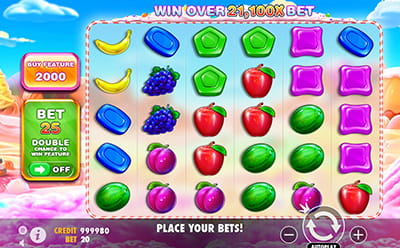
The original slot uses a 6×5 grid with 30 visible positions and a Pay Anywhere win system. This means wins are based on the number of matching symbols appearing across the grid, rather than on a traditional set of paylines. The lowest qualifying combination contains eight matching symbols, with larger awards for 10–11 and 12 or more. Checking this structure first helps prevent confusion when the visual layout does not resemble a standard reel slot.
Version checking matters because similarly named releases are separate games. The original should not be confused with Sweet Bonanza 1000, Sweet Bonanza Super Scatter, Sweet Bonanza 2500, Sweet Bonanza Xmas or Sweet Bonanza POP. A demo page may use a short title or a small thumbnail, so open the information or paytable screen before assessing the rules. The displayed title, symbol set and feature description should correspond to the game you intended to inspect.
Also note that a demo normally uses virtual credits and does not require a casino account. The hosting website controls how the demonstration opens, what stake values appear and whether certain buttons are available. That makes the demo useful for learning navigation and general gameplay, but not for confirming the account terms, payment options or settings of a particular Canadian operator.
Use the information panel before pressing Spin
The information button is usually the most valuable navigation tool on the screen. It should explain the symbols, the Pay Anywhere requirement, the Scatter symbol and the Tumble process. Read the rules in sequence rather than relying only on the animated presentation. When a win occurs, the matching symbols disappear, remaining symbols fall into the empty spaces and new symbols enter from above. Additional combinations can then form during the same paid spin.
Look for the displayed RTP and bet range in that same panel. Published configurations for the original game have been around 96.48%–96.51%, but the operator can select a different available configuration. The figure shown inside the loaded game is therefore more relevant than a number found in a general description. A short demo session cannot verify RTP, average returns or volatility; those are long-run statistical concepts, not outcomes that can be established through a few virtual spins.
Check the control labels as well. Stake selection, Spin, sound, music and game history are commonly available, while Quick Spin or Autoplay may depend on the implementation. If Autoplay appears, read its stop conditions carefully. Options may include stopping after a feature, a selected win, or a specified balance change. These controls alter how the session runs; they do not improve the underlying odds or turn the demo into a prediction tool.
Follow the tumble and Free Spins sequence
Once the basic controls are clear, observe one complete tumble sequence rather than judging isolated symbols. Winning combinations are paid together, then removed before the next symbols drop. The sequence continues until no new qualifying combination appears. This explains why several wins can be associated with one spin and why the final result may take longer to settle than a conventional single-line game.
The pink-and-white lollipop is the Scatter symbol and can land anywhere on the grid. Four or more Scatters trigger the built-in Free Spins feature, with four, five and six also awarding a direct Scatter payout under the documented original rules. The feature normally begins with 10 spins. Three or more additional Scatters during the feature award five extra spins, so the demo is a useful place to see how the trigger is presented.
During Free Spins, multiplier bombs can appear with values from 2x to 100x. They remain on the grid until the current tumble sequence ends. The bomb values from that sequence are then added together, and the resulting multiplier applies to the tumble win. This timing is easy to misunderstand if you watch only the final total, so use the game history or information panel where available to follow the order of events.
Separate game controls from casino controls
A demo can show the slot interface, but it cannot establish what a real-money casino account will offer. The game itself does not process deposits or withdrawals, manage identity checks or provide account recovery. Those functions belong to the operator hosting it. The same distinction applies to payment methods, minimum deposits, withdrawal timing, bonus rules, fees and any required verification.
Some versions include an Ante Bet or Double Chance-style option that raises the stake by 25% and increases the chance of triggering Free Spins naturally by adding Scatter symbols. The feature disables Free Spins purchase. A Bonus Buy option, where permitted, may purchase the 10-spin round for 100 times the selected base bet. These features can be absent from a demo or unavailable through a particular operator, so never treat a visible button as proof of real-money availability.
Promotional free spins and the built-in Free Spins feature are also different. A casino promotion may impose expiry dates, wagering requirements, maximum-bet rules or game-contribution limits. Those conditions are not part of the standard slot rules. Before using real funds or a promotion, read the operator’s stated terms and confirm which configuration, stake range and optional features apply to the account.
Make the demo useful for a Canadian decision
Use the demonstration to answer practical usability questions: Does the grid remain readable on your phone? Can you find the rules without leaving the game? Are the stake controls clear? Does the session show a game history? Is Autoplay easy to disable? These observations are more reliable than trying to judge whether a short sequence is “hot” or “cold”. A comfortable interface can reduce mistakes, but it cannot change the mathematical outcome.
Availability can differ by province, operator and account. Geography alone does not confirm that a particular casino, feature or payment method is available to you. If you move from demo mode to real-money play, review the operator’s age, location, account and verification requirements. Check the in-game information screen again because the displayed RTP, bet range and optional features may differ between casino versions.
Finally, decide on a session limit before using real funds, rather than allowing the pace of tumbles to determine the length of play. Operator-level tools may include deposit or loss limits, cooling-off periods and self-exclusion, but their availability depends on the casino and the rules applying to your province. For broader Canadian guidance on safer gambling choices, consult Canada’s responsible gambling information.

Questions Canadian players often ask
Does demo mode use real money?
No. An available demo mode normally uses virtual credits and does not create withdrawable winnings. It is intended to show the interface and game behaviour. Access conditions are set by the website hosting the demonstration, while real-money play requires a separate account with an operator.
Can a demo prove the slot’s RTP?
No. A short run cannot verify RTP, volatility or likely future results. RTP is a long-term statistical figure, and the applicable configuration may vary between operators. Read the RTP shown in the loaded game’s information panel instead of treating demo outcomes as evidence.
Are Bonus Buy and Ante Bet always available?
No. Optional features can vary by operator, game configuration and jurisdiction. The documented version may include an Ante Bet option and a Bonus Buy feature, but either can be disabled or unavailable. Check the active game rules and the operator’s stated requirements before relying on either control.
